






Spotlights
Special Education Teacher, SPED Teacher, Special Needs Educator, Learning Support Teacher, Inclusion Specialist, Resource Teacher, Autism Specialist, Behavioral Interventionist, Developmental Therapist, Classroom Assistant for Special Ed, Individualized Education Program (IEP) Coordinator, Disability Support Educator
Imagine a classroom where every student, regardless of their challenges, has the chance to learn, grow, and succeed. Special Education (SPED) Educators make this happen by adapting lessons and support to meet unique abilities, helping students overcome barriers and reach their potential.
SPED Educators design and deliver tailored instruction for students with disabilities, collaborating daily with general education teachers, therapists, families, and administrators. They assess individual needs, modify curricula, implement behavioral plans, and monitor progress to ensure each student thrives academically and socially.
Using specialized teaching strategies, assistive technology, and Individualized Education Programs (IEPs), SPED Educators play a critical role in fostering inclusive environments. Their work transforms lives by empowering students to develop skills and confidence that extend far beyond the classroom.
- Making a direct impact on students’ lives by helping them achieve academic and personal milestones.
- Building strong, trusting relationships with students and their families that last years.
- Collaborating with a passionate team of educators and specialists to create inclusive learning environments.
- Witnessing students’ growth in independence and self-esteem through tailored support.
Working Schedule
SPED Educators typically work during school hours within public or private schools, following an academic calendar. Their days often include classroom teaching, one-on-one sessions, team meetings, and preparation time. Many also spend extra hours outside of the classroom for IEP meetings, collaboration with families, and professional development. While the schedule can be demanding, educators often find the routine rewarding and meaningful.
Typical Duties
- Develop Individualized Education Programs (IEPs) based on assessments and student needs.
- Adapt general education curriculum to accommodate diverse learning styles and disabilities.
- Provide direct instruction and support in small groups or one-on-one settings.
- Collaborate with general education teachers to implement inclusive teaching strategies.
- Monitor student progress and adjust teaching methods accordingly.
- Implement behavioral interventions and support positive social skills development.
- Communicate regularly with parents or guardians about student progress and challenges.
- Work with therapists and counselors to integrate therapeutic goals into classroom instruction.
- Maintain detailed records on student performance and compliance with legal requirements.
- Train and support classroom aides or paraprofessionals assisting in the classroom.
- Advocate for resources and accommodations to support students’ learning.
- Participate in professional development to stay current with best practices in special education.
Additional Responsibilities
- Attend and contribute to multidisciplinary team meetings including IEP and 504 plan reviews.
- Coordinate with outside agencies such as speech or occupational therapy providers.
- Assist with transition planning for students moving between grade levels or post-school settings.
- Support crisis intervention and de-escalation strategies when needed.
- Promote awareness and understanding of disabilities among peers and staff.
- Help organize inclusive school activities and events.
- Maintain confidentiality and comply with educational and legal standards.
- Engage in ongoing self-reflection and professional learning to improve teaching effectiveness.
Morning begins with reviewing lesson plans and preparing materials tailored to each student’s IEP goals. Educators check in with students, setting a positive tone and identifying who might need extra support that day.
Midday is packed with delivering lessons, adapting activities on the fly, managing classroom behavior, and collaborating with co-teachers or specialists. Time is also devoted to documenting student progress and adjusting strategies as needed.
Afternoon often includes meetings with parents, therapists, or school staff to discuss student progress and coordinate supports. Educators reflect on the day’s successes and challenges while planning for upcoming lessons and interventions.
Soft Skills
- Patience and empathy
- Strong communication
- Creativity in lesson planning
- Collaboration and teamwork
- Problem-solving
- Adaptability
- Organization and time management
- Advocacy for students
- Emotional resilience
- Active listening
- Cultural sensitivity
- Conflict resolution
Technical Skills
- Knowledge of special education laws and regulations
- IEP development and implementation
- Assessment and progress monitoring
- Behavior management techniques
- Use of assistive technology
- Differentiated instruction strategies
- Data collection and analysis
- Familiarity with therapeutic techniques
- Technology for lesson delivery (e.g., educational software)
- Documentation and reporting skills
- Resource Room Teacher: Provides specialized instruction in a separate setting for students needing extra support.
- Inclusion Specialist: Supports students with disabilities in general education classrooms to promote inclusion.
- Autism Specialist: Focuses on teaching students on the autism spectrum using tailored strategies.
- Behavioral Interventionist: Develops and implements behavior plans to address challenging behaviors.
- Life Skills Teacher: Helps students develop daily living and independence skills.
- Transition Coordinator: Assists students in preparing for life after school, including employment or further education.
- Early Childhood Special Educator: Works with young children to address developmental delays early on.
- Therapeutic Educator: Integrates therapy goals with academic instruction for comprehensive support.
- Public school districts
- Private schools
- Charter schools
- Specialized education centers
- Nonprofit organizations focused on disability services
- Early intervention programs
- Residential treatment facilities
- Rehabilitation centers
- Community education programs
- Vocational training centers
- Hospital-based education programs
- State and local education agencies
SPED Educators often face the pressure of meeting diverse and complex student needs while complying with strict legal requirements. Balancing individualized instruction with class management can be challenging, especially during IEP deadlines or when addressing behavioral issues.
Work hours generally align with the school day but frequently extend into evenings for meetings, parent communication, and planning. The role demands emotional stamina, as educators support students with a range of disabilities and associated challenges.
Sacrifices may include limited personal time during peak school periods, navigating bureaucratic hurdles, and managing the emotional weight of advocating for students’ rights and needs. However, the deep fulfillment from making a difference often outweighs these challenges.
- Increasing emphasis on inclusive education models integrating students with disabilities into general classrooms.
- Growth in use of assistive technology to support communication and learning.
- Rising awareness of mental health and social-emotional learning within SPED programs.
- More personalized learning plans using data-driven decision making.
- Greater collaboration between educators, therapists, and families through digital platforms.
- Expansion of early intervention services for developmental delays.
- Focus on transition services preparing students for post-school life.
- Legislative updates influencing funding and special education policies.
- Integration of universal design for learning (UDL) principles.
- Advances in behavioral and therapeutic intervention techniques.
Many SPED Educators were drawn to helping others from a young age, often showing compassion toward peers with different abilities or challenges. They enjoyed activities that involved teaching, mentoring, or volunteering.
Some had personal experiences with disabilities in their family or community that inspired a desire to make education accessible to all. Early interests often included working with children, problem-solving, and advocating for fairness and inclusion.
Becoming a Special Education Educator usually requires at least a bachelor's degree in special education or a related field, along with state certification or licensure specific to special education teaching. Many pursue additional endorsements or graduate degrees to deepen expertise or qualify for advanced roles.
Students can take courses in relevant subjects such as:
- Special Education Foundations
- Child and Adolescent Development
- Behavioral Psychology
- Assessment and Evaluation in SPED
- Instructional Strategies for Diverse Learners
- Assistive Technology
- Communication Disorders
- Classroom Management
- Legal and Ethical Issues in Education
- Inclusive Education Practices
Hands-on experience through student teaching or internships is critical for developing practical skills. Building a strong portfolio of lesson plans, assessments, and documented successes helps when seeking employment. Ongoing professional development is essential to keep up with evolving best practices and legal requirements.
- Take courses in psychology, education, and child development to build foundational knowledge.
- Participate in volunteer or tutoring opportunities working with students who have disabilities.
- Join clubs or organizations focused on community service or advocacy.
- Develop strong communication and organizational skills through school projects and leadership roles.
- Explore technology classes to understand assistive devices and educational software.
- Attend workshops or seminars related to special education or teaching careers.
- Seek mentorship from educators or professionals in special education.
- Maintain good academic standing to qualify for competitive college programs.
- Prepare for certification exams by practicing reading and writing skills.
- Research colleges offering accredited special education degrees and certification pathways.
- Choose programs accredited by recognized education bodies.
- Look for hands-on practicum opportunities working with diverse student populations.
- Consider programs offering training in assistive technology and behavioral interventions.
- Seek schools with strong partnerships with local schools or agencies for fieldwork.
- Check if the program prepares students for state licensure exams.
- Evaluate faculty expertise and their connections to the special education community.
- Find programs that emphasize inclusive education and collaboration skills.
- Look for flexible schedules that accommodate working students if needed.
- Assess availability of support services for students pursuing education degrees.
- Prioritize programs with strong career placement or internship support.
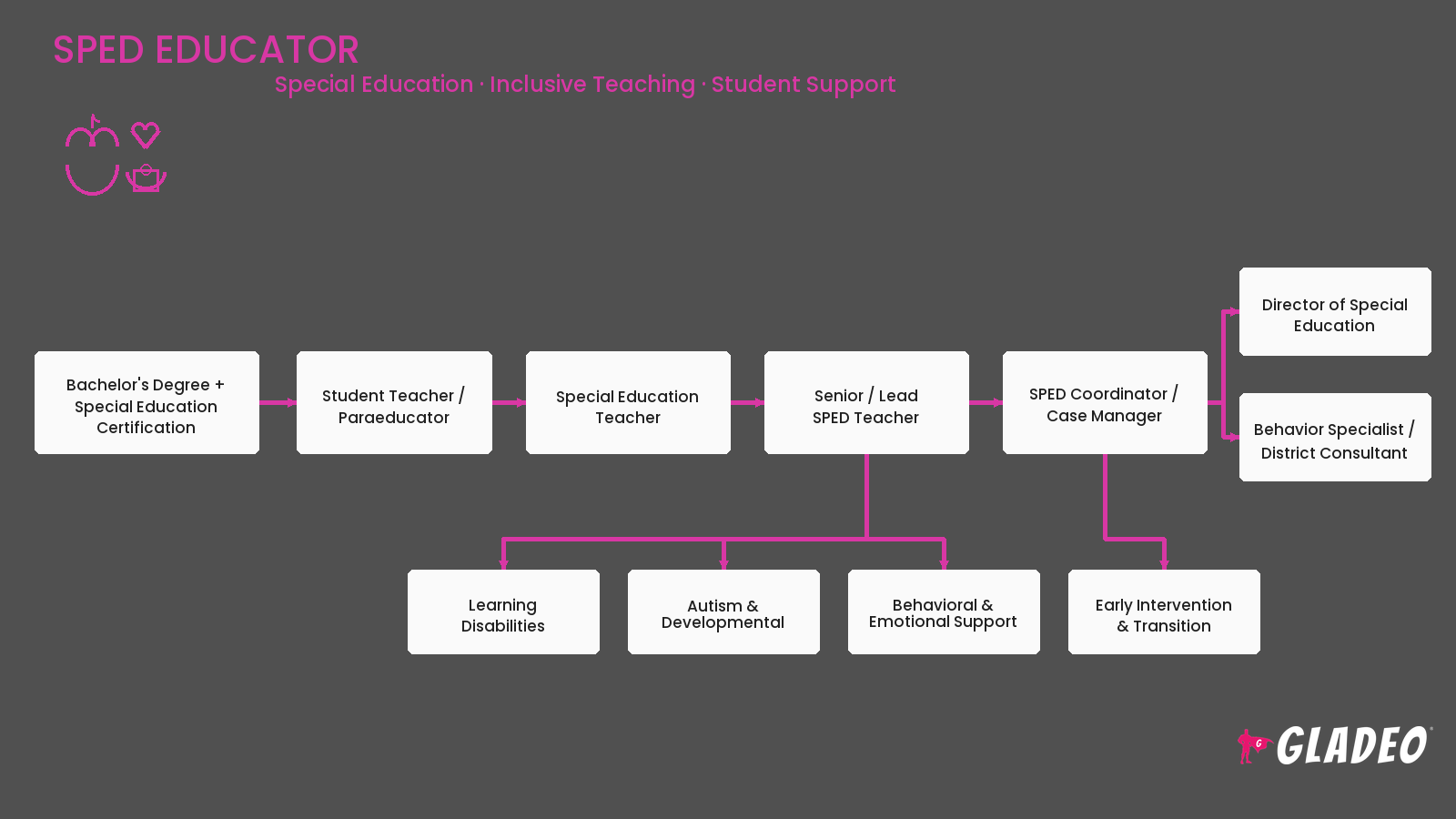
- Apply for paraprofessional or teaching assistant roles in special education classrooms to gain experience.
- Volunteer for summer programs or tutoring services supporting students with disabilities.
- Build a portfolio showcasing lesson adaptations, IEP involvement, and student progress.
- Network with local schools, special education coordinators, and professional associations.
- Attend job fairs focused on education and special needs services.
- Prepare for interviews by practicing responses about classroom management and individualized instruction.
- Obtain any required state certifications or substitute teaching licenses.
- Seek mentorship from experienced SPED educators to learn best practices.
- Stay engaged with professional development opportunities and workshops.
- Consider substitute teaching to gain varied experience across settings.
- Demonstrate patience, flexibility, and a willingness to learn in entry roles.
- Use online platforms and school district websites to find job openings.
- Pursue advanced degrees such as a master's in special education or educational leadership.
- Gain certifications in specialized areas like autism spectrum disorders or behavioral analysis.
- Develop expertise in assistive technology or transition planning.
- Take on leadership roles such as lead teacher or department coordinator.
- Publish or present on effective teaching strategies at conferences.
- Build strong professional networks within education and therapy communities.
- Seek roles in curriculum development or policy advocacy.
- Consider administrative paths like special education director or school principal.
Websites:
- Council for Exceptional Children (CEC) - https://www.cec.sped.org/
- National Association of Special Education Teachers (NASET) - https://www.naset.org/
- Wrightslaw - https://wrightslaw.com/
- Understood - https://www.understood.org/
- The IRIS Center - https://iris.peabody.vanderbilt.edu/
- National Dissemination Center for Children with Disabilities (NICHCY) - https://www.parentcenterhub.org/
- Teacher Vision Special Education Resources - https://www.teachervision.com/special-ed
- Assistive Technology Industry Association (ATIA) - https://www.atia.org/
- Edutopia Special Education Section - https://www.edutopia.org/topic/special-education
- Special Education Guide - https://www.specialeducationguide.com/
- American Speech-Language-Hearing Association (ASHA) - https://www.asha.org/
- National Center for Learning Disabilities (NCLD) - https://www.ncld.org/
- Autism Speaks - https://www.autismspeaks.org/
- Positive Behavioral Interventions & Supports (PBIS) - https://www.pbis.org/
Books:
- Special Education Law by Peter W. D. Wright and Pamela Darr Wright
- The Special Educator's Survival Guide by Roger Pierangelo and George Giuliani
- Inclusion: Effective Practices for All Students by James McLeskey, Nancy L. Waldron, Fred Spooner, and Bob Algozzine
- Teaching Students with Special Needs in General Education Classrooms by Tom E. C. Smith, Edward A. Polloway, James R. Patton, and Carol A. Dowdy
- The Behavior Code: A Practical Guide to Understanding and Teaching the Most Challenging Students by Jessica Minahan and Nancy Rappaport
If a career as a SPED Educator doesn’t fit your path, there are many related roles that also involve supporting individuals with disabilities or working in education and human services.
- General Education Teacher
- School Counselor
- Speech-Language Pathologist
- Occupational Therapist
- Behavioral Therapist
- Paraprofessional/Teaching Assistant
- Child Psychologist
- Rehabilitation Specialist
- Educational Diagnostician
- Youth Advocate
Click here to download the infographic
Newsfeed

Featured Jobs
Online Courses and Tools