






Spotlights
Fine Artist, Visual Artist, Contemporary Painter, Studio Artist, Visual Arts Painter, Fine Art Painter, Abstract Artist, Portrait Artist, Landscape Painter, Modern Painter, Muralist, Mural Artist
Painters are a unique and highly-skilled category of fine artists whose work consists of applying various types of paint media to surfaces to create visually pleasing results. While they share the same job title as commercial painters (who apply paint to buildings), Painters in the art world obviously work on a much smaller scale.
Typical painting projects involve applying paint on canvas, though Painters may also paint designs on objects (such as ceramics) or paint murals on walls. Though we might think of Painters as being self-employed artists who make a living selling their work one piece at a time, there are a number of employment positions available. Film studios and book/periodical publishers are major employers of Painters whose skills are needed to create movie posters, book and magazine covers, and children’s books, as well as film storyboards and concept art, promotional materials, and merchandise packaging art. Painters are also often hired to fill teaching positions in schools from K-12 to colleges and universities.
The overall job outlook for fine artists appears solid, but it’s important to remember that changes in the economy impact art sales. That’s why many Painters hold traditional (or at least freelance) positions while building their reputations…so they can get their work displayed in galleries or sold to businesses and collectors!
- Earning a living doing something you love!
- Producing unique artwork that fulfills your creative side and inspires or delights others
- Training aspiring painters artists (if working as an instructor/teacher)
- Exposing diverse types of students to art forms and techniques
"When I am able to actualize my vision on a canvas, able to drop into the creative flow and produce a painting, that is very satisfying. I have found that a great symptom of being a Visual Artist is the strong curiosity and enjoyment of the world around me that I have developed through years of honing my sight and listening for inspiration. Living in-tune with my personal appreciation of beauty every day is incredibly rewarding." Isabell K. Fearnsby, Professional Painter, Adjunct Professor, Cogswell College
Working Schedule
Painters may or may not work full-time, depending on their position and personal desires. Many don’t want to hold traditional jobs, but supplement their income by working as freelancers or teachers. Hours may include working nights or weekends, depending on the schedule they select and the needs of their employer, clients, or customers.
Typical Duties
- Work with employers or clients to determine specific needs and time frames
- Discuss the scope and budget for an art project, as applicable
- Agree upon the painting style and materials to be used
- Find templates, models, and photos to work from, when needed
- Create sketches and mockups to get approved before proceeding
- Work around the future placement of any additional graphics or text that will accompany your work (for example, if doing a book cover, understand the layout of where the title, subtitle, author’s name, publisher’s logo, etc., will go)
- If working as an instructor or teacher, develop lesson plans and curricula relevant to diverse classrooms and settings
- Train a broad range of student types from K-12/college students to patients in healthcare settings, senior citizens, tourists, or executives, depending on settings
- Stay flexible and meet students at their current level of knowledge and experience
- Teach proper use of applicable tools and materials for specific projects
- Share knowledge of lines, 2-D shapes, textures, perspective, color wheels, and value (i.e., lightness or darkness tones)
- Additional Responsibilities
- Ensure all needed materials and equipment are available
- Plan for possible travel, depending on the work needed
- Guide students along their creative journeys as they explore styles
- Teach skills related to art as well as self-confidence, communication, and collaboration
- Organize short workshops, residencies, or topical teaching series
- Set up collaborative projects that allow groups to work together
- Stay on top of new developments and trends
"Being an Artist is 50% production and 50% business and marketing ones work.
For me, there is the inspiration, the reference photos or on-site painting, the designing and planning the painting, looking at masterworks to broaden my ideas of how the piece can come out.
After all that, is the actual painting, which, for me can take anywhere from 1 hour to over 100 hours depending on the size and the piece.
After the painting is completed, I usually make a series of paintings to support it if it is not already part of a series, that way when I put it in a show it has a context - like an album, versus just a single song.
I find a venue or gallery to show the piece or series, or the venue finds me if I am lucky.
Once that is secure, the shameless self promotion ensues.
Sales is a big aspect to being a professional artist. There is a lot of material available to us on how to go about negotiating and creating more sales, which are very helpful and not as schmarmy as it sounds.
I've found that Sales and Marketing are essential aspects of being a Professional Artist, and that those skills are just as important as the talent and inspiration of creating artwork. Sales and Marketing are not to be underrated as that is how an Artists pays for ones rent, tools, materials and studio space.
Being a teacher is a whole other set of skills, but in relation to being an Artist being able to bring in my passion for Art, Entrepreneurship and Business into my teaching is no less than a delight. For me, teaching is the perfect complement to being a Professional Artist. " Isabell K. Fearnsby, Professional Painter, Adjunct Professor, Cogswell College
"With any business, there is always a crucial communication aspect.
In person, emails, art shows, social social media, updating my website and phone calls are all a daily part of being a Professional Artist.
With that communication, one of the most important elements is follow-through on what I say I will do, which builds credibility - I deliver the piece on time, email back as soon as possible and be available as much as possible.
There is also the wonderful creation side: The Studio. It is a very introverted thing. I treat it like going into any workplace, I have a set time set aside that is just for the studio. Once my paint is out that is it, I shut down to the outside world and even forget how to talk after long stretches sometimes!
So the only communication in the studio is between my brush and where and how to put the paint.
On days where the creative flow is jilted, or I am not at my best, those are the times when I tend to the studio materials. There is always organizing, cleaning brushes, going to the Art Store to replenish paints or other material work to be done. This is just as important as anything else, and has its time - it took me a while to figure out when to tend to these things versus actual painting, as I'm not inclined to take inventory or build new palettes, but there is a time for this, and I get that now. " Isabell K. Fearnsby, Professional Painter, Adjunct Professor, Cogswell College
Soft Skills
- Ability to assess and guide student behavior (if teaching)
- Ability to inspire others
- Communication skills
- Creativity
- Customer service
- Empathy
- Enthusiasm
- Organizational skills
- Patience
- Resourcefulness
- Skills for coordinating and instructing activities (if teaching)
- Social and cultural awareness
- Sound judgment and decision-making
- Time management
Technical Skills
- Familiarity with tools and supplies relevant to the level being taught
- Art supplies may include: various weights and types of paper, canvas, pencils, paintbrushes, trays, thinners, acrylic paint, oil paint, watercolors, tempera, sponges, hand cleaners
- Knowledge of visual presentation equipment
- Knowledge of art styles, famous artists, fair market values, market cash values, and valuation factors for emerging, mid-career, and established artists
- Understanding of social media
- Oil Painters
- Watercolorists
- Acrylic Painters
- Gouache Painters
- Tempera and Fresco Painters
- Portrait Painters
- Figure and Life Painters
- Landscape Painters
- Plein Air Painters
- Still Life Painters
- Abstract Painters
- Non-Objective and Geometric Painters
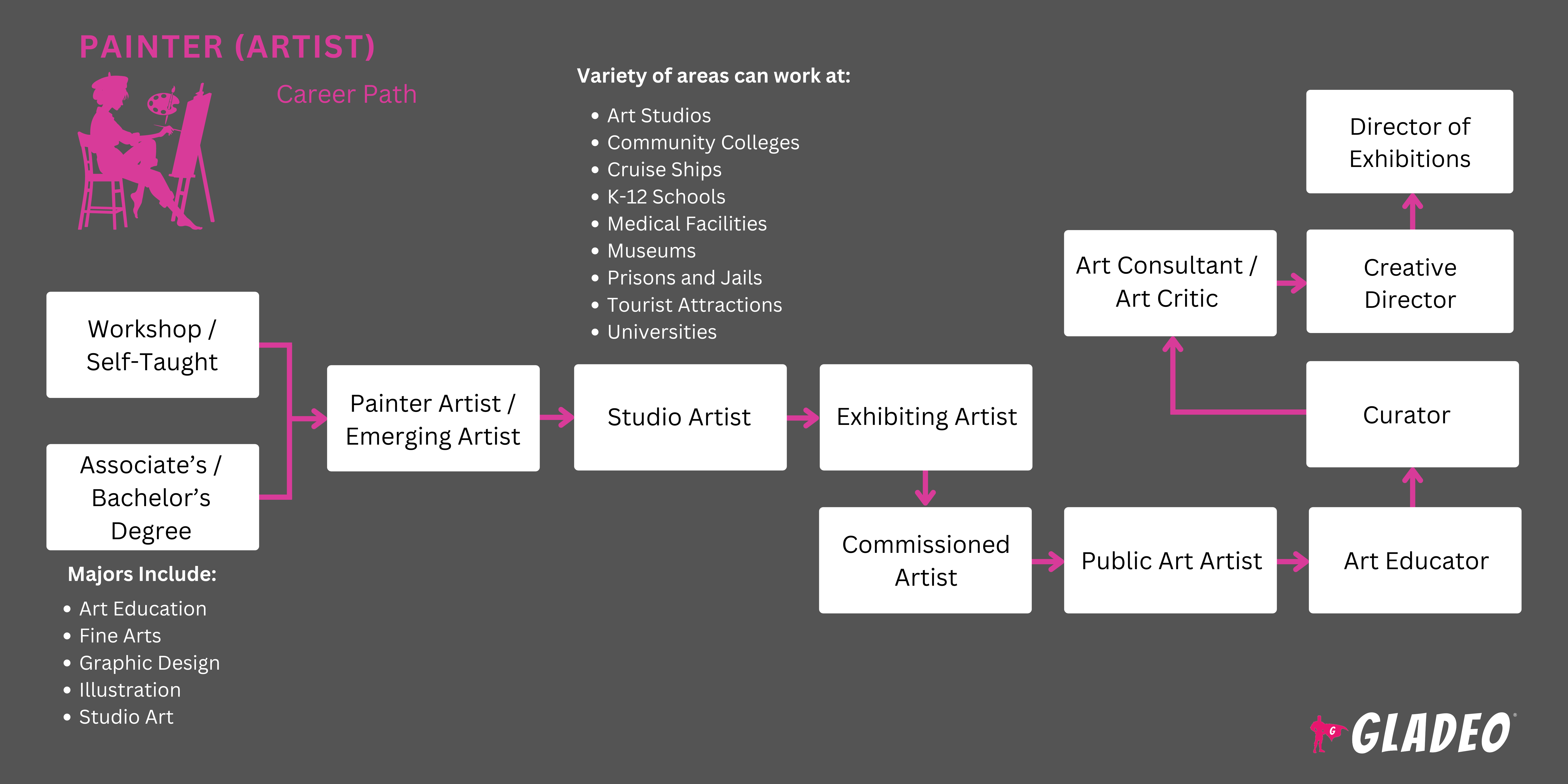
- Art studios
- Community colleges
- Cruise ships
- K-12 schools
- Medical facilities
- Museums
- Prisons and jails
- Tourist attractions
- Universities
"There are lots of local Art Organizations where one can find opportunity to teach or offer workshops or get gigs. Usually an Artist, starting out, has to do a lot of outreach to get shows and get their work out there. " Isabell K. Fearnsby, Professional Painter, Adjunct Professor, Cogswell College
Everyone has heard the term “starving artist,” which refers to an artist sacrificing their financial needs to continue working on their art. While this level of devotion may be laudable, it’s probably wiser to try and focus on both the art and the money aspects at the same time. With a little planning, there’s no need for talented Painters to ever struggle financially.
Yes, it is true that Painters may not always have as stable or predictable a career path as some workers, but that doesn’t necessarily mean going broke. Freedom and flexibility are major selling points for people who eschew the idea of a traditional 8-to-5 schedule, but the tradeoff is that Painters might have to work non-traditional hours.
Some Painters just want to work at night (or whenever the muse strikes them) versus getting up early every day. Many prefer to offer their services in a freelance or project-based contract manner, earning enough income from a particular job that they can afford to take some downtime after.
For Painting teachers, teaching might make up the bulk of their income earnings, which means they must be devoted educators. Working as a full-time teacher comes with its own set of expectations and sacrifices, which includes keeping up with the school’s schedule and spending time preparing for classes and grading assignments.
"There have been pretty sizable financial sacrifices, that is for sure. But I'd have to say time. One has to put in a lot of time to be a successful Artist. That means that all the things that normal people do, like just hang out and chill, watch movies or play video games, that time has to be used for Art. There are down-times and times to hang with friends, but I find that if I want to get any work done I can only hang out minimally. An Artist has to have very understanding friends and family. " Isabell K. Fearnsby, Professional Painter, Adjunct Professor, Cogswell College
- Growing demand for large-scale, immersive, and experiential painting installations
- Rise of digital painting tools and tablets alongside traditional media
- Increased use of AI-assisted tools for reference, ideation, and composition
- Boom in online art sales and direct-to-collector platforms
- Social media and process videos driving discovery and commissions
- Renewed interest in figurative and representational painting
- Sustainability pushing toward non-toxic, eco-friendly paints and solvents
- Growth of muralism and public art commissions in cities
- Popularity of textured, impasto, and mixed-media surfaces
- Blurring lines between painting and sculpture through shaped canvases and reliefs
- Rise of artist residencies and international exchange programs
- NFTs and digital provenance experiments for physical paintings
- Growing collector interest in emerging and underrepresented artists
- Personal narrative, identity, and memory as dominant subject matter
- Revival of traditional techniques and historical pigments
- Collaborative and community-based painting projects
- Painters diversifying income through prints, teaching, and brand work
- Sustainability-conscious framing, shipping, and studio practices
Like all artistic and creative types, Painters were often passionate about arts at an early age. They may have found mental solace in the physical act of painting as well as a sense of empowerment after creating a finished piece that expressed something meaningful to them.
To master any form of painting takes hours of practice, which indicates that successful Painters must have a strong sense of commitment and dedication to things they put their minds to. Painters also have a keen desire to share their vision with others, and may have enjoyed showing off their art when they were younger.
Becoming a Painter usually involves a mix of formal art education and years of self-driven practice, though there is no single required path. Many painters earn a bachelor's or master's degree in fine art, painting, or a related field, where they build foundational skills and study art history. Others develop through ateliers, community college courses, workshops, apprenticeships, or relentless personal practice — gallery representation and sales often depend more on the body of work than on the diploma.
Students can take courses in relevant subjects such as:
- Drawing and Figure Studies
- Painting Techniques (oil, acrylic, watercolor, gouache)
- Color Theory and Pigment Knowledge
- Composition and Perspective
- Anatomy and Form
- Art History and Contemporary Art
- Materials, Surfaces, and Studio Safety
- Printmaking and Mixed Media
- Digital Painting and Photography
- Portfolio and Exhibition Practice
- Art Business, Marketing, and Pricing
- Studio Critique and Professional Development
On-the-Job Training
- Painters often learn by doing — sustained studio practice is the core of the training.
- Early experience comes through commissions, group shows, open studios, and artist assistantships.
- Mentorship from established painters, galleries, or artist residencies accelerates development.
- Professional growth includes learning to photograph work, write statements, price pieces, and manage clients.
- Many supplement income through teaching, mural work, illustration, or gallery and studio roles.
Optional Certifications and Memberships
- Art teaching credentials (required for public school art positions)
- Art handling and installation training (valuable for galleries and museums)
- Studio safety and hazardous materials certifications
- Grant writing or arts administration courses
- Professional memberships such as local arts councils or artist guilds
- Draw and paint constantly — keep sketchbooks and work from life as much as from photos.
- Take every art class available: drawing, painting, printmaking, ceramics, photography.
- Visit museums, galleries, and open studios to study work in person.
- Build a portfolio of finished pieces, and learn to photograph them properly.
- Enter student art shows, juried exhibitions, and local competitions.
- Join art clubs, start a zine, or organize group shows with classmates.
- Take art history courses to understand where your work sits in a longer conversation.
- Experiment across media — oil, acrylic, watercolor, gouache, mixed media.
- Learn digital tools as a complement: Photoshop, Procreate, and basic documentation.
- Seek mentors and ask for critiques, then act on the notes.
- Assist a working artist, muralist, or gallery to learn the professional side.
- Take a business or marketing class — pricing, contracts, and promotion matter.
- In college, pursue fine art or painting and use studio time and faculty critiques fully.
- Apply for residencies, scholarships, and summer intensives when eligible.
- Look for programs with strong studio time and dedicated painting facilities.
- Choose schools that offer a range of media — oil, acrylic, watercolor, and mixed media.
- Verify that faculty are practicing artists with exhibition records and gallery connections.
- Ensure the curriculum includes drawing and figure studies, not painting alone.
- Check availability of open studio hours, easels, ventilation, and safe solvent handling.
- Look for courses in color theory, composition, and art history alongside technique.
- Consider programs that teach the professional side — pricing, contracts, and portfolio building.
- Seek schools with regular critiques, exhibitions, and visiting artist programs.
- Evaluate class sizes to ensure personalized instruction and individual feedback.
- Find programs with ties to galleries, residencies, or local arts communities.
- Consider cost, materials expenses, and financial aid availability.
- Research graduate outcomes — exhibition history, gallery representation, and teaching placements.
- As noted by the Bureau of Labor Statistics, 54% of fine artists are self-employed. If that’s your plan, then think of yourself as your own boss and start hustling!
- Find a suitable place to work where you can focus on producing art while also finding customers and clients who want to commission you for a project
- Skill and reputation mean a lot in this business. Your educational background is important, but having a professional portfolio to show employers goes a long way
- Gain recognition by getting your work displayed in galleries and online via Instagram and other social platforms
- Set up booths at art fairs and other events where you can sell your work
- On your resume, list ample details about your professional experiences as an artist, as well as any other work experience, formal education, volunteerism, and accolades
- Look on employment portals like Indeed but keep in mind you might have to “make your own” opportunities
- Read job posts thoroughly. Make sure your background meets all applicable needs listed by the employer
- Take note of skills/experience gaps so you can work on those to boost your qualifications
- Move to where the jobs are! The highest employment levels for fine artists is in California, Texas, Georgia, Florida, and Ohio
- AdvisorSmith lists the best large cities for aspiring artists as Los Angeles, New York, Chicago, Atlanta, Dallas, Miami, Philadelphia, Washington, Detroit, and Minneapolis
- Reach out to old supervisors, teachers, and mentors. Their letters of reference help employers vet applicants
- Be enthusiastic! Even if you’re a successful professional Painter, you must convey to potential employers how important their job is to you
"Keep asking people for leads and talking about what you are doing. Call all the Art organizations and galleries in your area looking for leads. Donate your work to benefit auctions, they usually lead to better opportunity. You never know who might know someone or something that might be helpful - or someone who you can help - so treat every person you come in contact with with respect and appreciation. Create a network of mutually supportive people." Isabell K. Fearnsby, Professional Painter, Adjunct Professor, Cogswell College
- Find collaborators to work on joint projects with
- Keep visiting indie and national art galleries and museums that feature work similar to yours. Introduce yourself to curators and owners. Discuss how you might get featured when they put out calls and if they might want to represent your work (if you want to sell)
- Learn about the business and marketing side of the art world
- Attend exhibitions and network with people in the industry
- Learn to market yourself as an artist! Make a name for yourself through branding!
- Submit art to be featured in relevant magazines. Book appearances on radio shows and podcasts
- If you are teaching, strengthen your credentials with a master’s degree or by completing additional training or advanced certifications
- Build rapport with school administrators and faculty, community members involved in the arts, youth associations, and parents groups
- Keep your students motivated by being a student yourself! Stay up-to-date on creative new pedagogical methods through constant reading, watching tutorials, and other learning methods
Websites
- Art Business News
- Art Dealers Association of America
- Association of Medical Illustrators
- National Assembly of State Arts Agencies
- National Association of Independent Artists
- National Association of Schools of Art and Design
- National Cartoonists Society
- National Endowment for the Arts
- National Watercolor Society
- New York Foundation for the Arts
Books
- Artist's Painting Techniques: Explore Watercolors, Acrylics, and Oils, by DK
- The Student's Guide to Painting: Revised and Expanded Edition, by Jack Faragasso
- How to Paint Like the Old Masters, by Joseph Sheppard
If painting doesn't end up being your perfect fit, there are many related careers that use your eye for color, composition, and craft in different ways.
- Illustrator
- Concept Artist
- Muralist
- Printmaker
- Art Teacher
- Gallery Manager or Curator
- Art Restorer and Conservator
- Scenic and Production Artist for film and theater
- Textile and Surface Pattern Designer
- Graphic Designer
- Art Director
- Set Decorator
- Tattoo Artist
- Editorial Illustrator
- Art Therapist
- Frame Maker and Art Handler
- Color Consultant
- Digital Painter for games and animation
- Arts Administrator
- Fine Art Appraiser
"If you want to be an Artist, call yourself an "Artist," you'll take more responsibility for it that way. Keep an open mind to it not looking like what you think it will, and keep doing what you love! Even if you have to have a day job doing something totally different, that maybe you don't love, and you do what you love only in your free time, if you are determined eventually it will come together." Isabell K. Fearnsby, Professional Painter, Adjunct Professor, Cogswell College
Newsfeed

Featured Jobs
Online Courses and Tools