






Spotlights
Geothermal Plant Manager, Geothermal Operations Manager, Renewable Energy Production Manager, Geothermal Technician, Geothermal Energy Supervisor, Geothermal Maintenance Technician, Energy Production Coordinator, Geothermal Systems Operator, Renewable Energy Technician, Geothermal Field Supervisor, Geothermal Power Plant Technician, Geothermal Operations Technician
Imagine powering entire communities with clean, renewable energy drawn directly from the Earth's heat. Geothermal Production Managers and Technicians make this possible by overseeing the complex systems that convert underground heat into electricity and heating solutions, helping reduce carbon footprints and build a sustainable future.
These professionals are the hands-on leaders and experts who manage daily operations at geothermal power plants. They collaborate with engineers, maintenance teams, environmental specialists, and control room operators to monitor equipment, troubleshoot issues, optimize energy output, and ensure safety standards are met. Their work keeps the turbines spinning, the steam flowing, and the power grids energized.
Using advanced monitoring systems, control software, and mechanical tools, Geothermal Production Managers and Technicians analyze temperature, pressure, and flow data to fine-tune plant performance. Their role is crucial in maintaining efficient, environmentally friendly energy production that supports communities and combats climate change.
- Playing a key role in producing clean, renewable energy that helps protect the planet.
- Solving technical challenges and optimizing complex systems for maximum efficiency.
- Working outdoors and indoors in dynamic, hands-on environments.
- Collaborating with diverse teams to keep energy flowing and communities powered.
Working Schedule
Geothermal Production Managers and Technicians typically work full-time schedules, often in shifts to ensure round-the-clock plant operation. Their work environment includes control rooms, outdoor plant sites, and machinery rooms, sometimes requiring presence in remote or rugged locations. While many are employed full-time by energy companies, some work as contractors or consultants. Meeting production targets and responding swiftly to equipment issues can create high-pressure moments, especially during maintenance or emergency repairs.
Typical Duties
- Monitor geothermal plant systems including turbines, pumps, and heat exchangers to ensure optimal operation.
- Analyze operational data such as temperature, pressure, and flow rates to identify performance issues.
- Coordinate routine maintenance and emergency repairs to minimize downtime.
- Supervise and train technicians and operators on safety protocols and operational procedures.
- Collaborate with engineers to implement system upgrades and efficiency improvements.
- Ensure compliance with environmental and safety regulations.
- Prepare reports on plant performance and incident investigations.
- Manage inventory of spare parts and equipment necessary for plant operation.
- Conduct inspections of wells, pipes, and other infrastructure to detect leaks or damage.
- Communicate with energy grid operators to balance electricity supply and demand.
- Participate in emergency response drills and actual incident management.
- Oversee budget and resource allocation for plant operations.
Additional Responsibilities
- Develop and update operational procedures and manuals.
- Lead safety meetings and enforce workplace safety standards.
- Engage with community stakeholders and regulatory agencies regarding plant activities.
- Stay updated on emerging geothermal technologies and industry trends.
- Assist in planning for plant expansions or new installations.
- Participate in environmental impact assessments and sustainability initiatives.
- Manage contractors and vendors providing services or equipment.
- Support research projects for improving geothermal energy extraction.
The day often begins with reviewing overnight production reports and system alerts in the control room, assessing any anomalies or maintenance needs. The manager or technician communicates with their team to assign tasks and prioritize urgent repairs or inspections.
Midday involves hands-on system checks, troubleshooting equipment, and coordinating with maintenance crews. They might visit wells or turbine sites to inspect physical components, ensuring everything operates within safe parameters. Collaboration with engineers and environmental specialists keeps processes efficient and compliant.
Towards the afternoon and evening, they analyze performance data, document findings, and update operational logs. Meetings with management or regulatory representatives might occur to discuss compliance or improvements. Before shift changes, they brief incoming teams to ensure continuous, safe plant operation.
Soft Skills
- Problem-solving mindset
- Strong communication skills
- Attention to detail
- Team leadership
- Adaptability and flexibility
- Critical thinking
- Safety-conscious attitude
- Time management
- Stress resilience
- Collaboration and teamwork
- Decision-making under pressure
- Organizational skills
Technical Skills
- Mechanical system troubleshooting
- Data analysis and interpretation
- Knowledge of geothermal power generation
- Familiarity with control room software
- Understanding of thermodynamics and fluid mechanics
- Preventive maintenance techniques
- Safety and environmental compliance standards
- Operation of monitoring instruments
- Technical report writing
- Equipment calibration and testing
- Production Manager: Oversees full plant operations, manages teams and resources.
- Technician: Focuses on hands-on maintenance, system monitoring, and repairs.
- Field Operator: Works on-site managing wellheads and steam flow.
- Maintenance Supervisor: Leads maintenance teams and schedules repairs.
- Environmental Compliance Specialist: Ensures operations meet environmental regulations.
- Control Room Operator: Monitors and controls plant systems remotely.
- Project Manager: Coordinates new plant construction or upgrades.
- Energy Analyst: Studies data to improve plant efficiency and output.
- Renewable energy companies
- Utility providers
- Geothermal power plants
- Engineering firms specializing in energy
- Government energy departments
- Environmental agencies
- Research institutions focused on renewable energy
- Equipment manufacturers
- Consulting firms in energy management
- Educational institutions with energy programs
- Construction companies for energy facilities
- Maintenance service providers for industrial plants
Geothermal Production Managers and Technicians face high responsibility to keep complex systems running safely and efficiently. Unexpected equipment failures or environmental incidents require quick, calm responses, often under tight deadlines.
Work hours can include early mornings, evenings, weekends, or overnight shifts to maintain continuous plant operation. Remote or outdoor work exposes professionals to varying weather and physical demands.
The role demands both technical expertise and strong interpersonal skills to coordinate multiple teams, comply with regulations, and manage emergencies. Sacrifices may include irregular hours and the stress of maintaining critical infrastructure.
- Increasing integration of AI and machine learning for predictive maintenance.
- Growth in hybrid renewable plants combining geothermal with solar or wind energy.
- Advancements in drilling technology allowing access to deeper geothermal reservoirs.
- Improved materials for corrosion resistance and longer equipment life.
- Expansion of geothermal energy in new geographic regions.
- Greater focus on environmental monitoring and sustainability practices.
- Development of binary cycle power plants for low-temperature resources.
- Use of IoT sensors for real-time system monitoring.
- Enhanced automation reducing manual operational tasks.
- Emerging financing models supporting geothermal projects.
Many who become Geothermal Production Managers or Technicians enjoyed tinkering with mechanical devices and exploring how machines work. They often showed curiosity about energy, nature, and environmental science during their school years.
Hands-on activities like building models, experimenting with heat and electricity, or participating in robotics clubs hinted at their future career. An early interest in outdoor exploration and problem-solving also aligns well with this role.
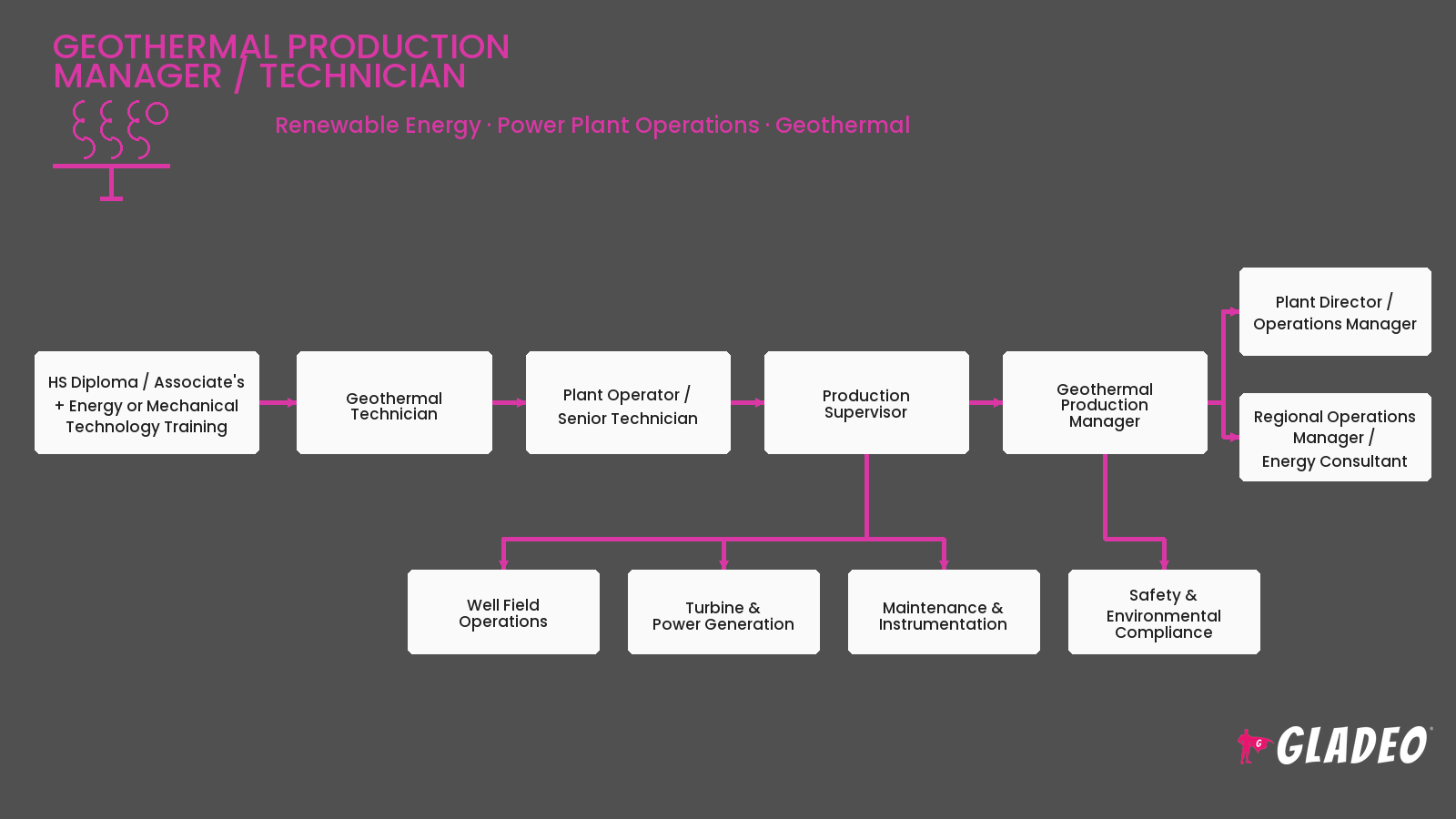
Becoming a Geothermal Production Manager or Technician typically involves specialized training in energy technology, engineering, or industrial maintenance. Many enter the field with associate or bachelor's degrees in renewable energy, mechanical engineering, or related disciplines, complemented by hands-on apprenticeships or technical certifications.
Students can take courses in relevant subjects such as:
- Physics and Thermodynamics
- Mechanical Engineering Fundamentals
- Renewable Energy Systems
- Industrial Safety Practices
- Electrical Systems and Controls
- Environmental Science
- Geology and Earth Science
- Data Analysis and Monitoring
- Technical Drawing and CAD
- Maintenance and Repair Techniques
Beyond formal education, gaining practical experience through internships, co-op programs, or entry-level technician roles is crucial. Building a portfolio of hands-on skills and certifications in safety and equipment operation significantly improves job prospects in this field.
- Take advanced math and science courses including physics and chemistry.
- Join STEM clubs focused on engineering or energy.
- Participate in technical workshops or vocational training programs.
- Seek internships or summer jobs with energy companies or power plants.
- Learn computer skills, especially data analysis and control software.
- Explore environmental science and geology electives.
- Attend career fairs and industry talks about renewable energy.
- Develop strong communication and teamwork skills.
- Practice problem-solving through robotics or mechanical projects.
- Consider dual-enrollment courses in energy technology or engineering.
- Choose programs with strong hands-on lab components.
- Look for schools offering internships or partnerships with energy companies.
- Verify availability of courses in geothermal or renewable energy.
- Check for certifications in industrial safety and equipment operation.
- Ensure the program teaches both mechanical and electrical systems.
- Select programs with experienced faculty in energy fields.
- Consider institutions with access to geothermal facilities or research centers.
- Prioritize schools with strong career services and job placement support.
- Look for opportunities to participate in research projects.
- Evaluate curriculum for up-to-date technology and software training.
- Apply for entry-level technician roles at geothermal or other renewable energy plants.
- Volunteer for summer internships in energy production or environmental monitoring.
- Build a portfolio documenting hands-on experience with mechanical or electrical systems.
- Develop a network by attending industry events and joining student energy organizations.
- Seek mentorship from experienced technicians or engineers.
- Gain certifications in safety (OSHA, etc.) and equipment handling.
- Practice operating monitoring software and diagnostic tools.
- Prepare for interviews by studying plant operations and energy basics.
- Demonstrate reliability and problem-solving skills in early roles.
- Consider roles in related fields like HVAC or industrial maintenance as stepping stones.
- Stay open to shift work and remote assignments to gain diverse experience.
- Keep learning about emerging geothermal technologies and methods.
- Pursue advanced certifications in geothermal technology or energy management.
- Develop leadership and project management skills.
- Take on supervisory responsibilities over technicians or small teams.
- Network within the renewable energy industry for advancement opportunities.
- Stay current with technological advances and industry regulations.
- Seek roles involving budgeting and strategic planning.
- Attend professional conferences and training workshops.
- Aim for positions managing larger plants or multiple sites.
Websites:
- Geothermal Resources Council (geothermal.org)
- International Geothermal Association (geo-energy.org)
- National Renewable Energy Laboratory (nrel.gov)
- U.S. Department of Energy Geothermal Technologies Office (energy.gov/eere/geothermal)
- Renewable Energy World (renewableenergyworld.com)
- Energy Central (energycentral.com)
- Society of Maintenance & Reliability Professionals (smrp.org)
- American Society of Mechanical Engineers (asme.org)
- Occupational Safety and Health Administration (osha.gov)
- Energy.gov - Office of Energy Efficiency & Renewable Energy
- Clean Energy Council (cleanenergycouncil.org.au)
- World Energy Council (worldenergy.org)
- LinkedIn Renewable Energy Groups
- Green Tech Media (greentechmedia.com)
Books:
- Geothermal Power Plants: Principles, Applications, Case Studies and Environmental Impact by Ronald DiPippo
- Geothermal Energy: Renewable Energy and the Environment by William E. Glassley
- Introduction to Renewable Energy by Vaughn C. Nelson
- Power Plant Engineering by P.K. Nag
- Sustainable Energy – Without the Hot Air by David J.C. MacKay
If working as a Geothermal Production Manager or Technician doesn’t fit your path, there are many related careers in the energy and engineering fields that still let you contribute to sustainable power and industrial operations.
- Energy Systems Technician
- Solar Power Plant Operator
- Wind Turbine Technician
- Environmental Compliance Specialist
- Mechanical Maintenance Technician
- Electrical Systems Engineer
- HVAC Technician
- Industrial Machinery Mechanic
- Oil and Gas Production Technician
- Utility Plant Operator
Newsfeed

Featured Jobs
Online Courses and Tools