







Spotlights
Technology Sales Specialist, IT Sales Advisor, Computer Hardware Sales Representative, Software Sales Consultant, Tech Solutions Specialist, Client Technology Consultant, Digital Product Sales Associate, IT Account Executive, Technical Sales Representative, Computer Systems Sales Agent, Software Licensing Specialist, Technology Retail Consultant
Computers power almost everything we do—from classrooms and offices to hospitals, factories, and homes. Someone needs to help customers find the right computer or accessory, set it up correctly, and troubleshoot problems when things go wrong. That’s where Computer Retail Sales & Support Specialists come in.
These professionals work on the front lines of the tech world, helping people choose the best laptops, desktops, tablets, printers, and accessories for their needs. Whether it’s assisting a family buying their first home computer, guiding a small business through setting up a network, or explaining the differences between operating systems, their job blends technical know-how with customer service skills.
Computer Retail Sales & Support Specialists often work in retail stores, electronics shops, or tech service centers. They demonstrate products, answer customer questions, process transactions, and explain warranty and service options. On the support side, they help install software, set up accounts, remove malware, and troubleshoot hardware or connectivity problems.
They also stay up to date with the latest tech trends, ensuring they can make smart recommendations and solve problems quickly. Their goal isn’t just to sell a product—but to help customers feel confident using technology in their daily lives.
- Helping people find the right technology that improves their daily lives.
- Learning about the latest computer trends, gadgets, and software before everyone else.
- Seeing satisfied customers return for your advice and support.
- Turning complex technical concepts into simple solutions for real people.
- Building long-term customer relationships that lead to trust and repeat business.
Working Schedule
- Computer Retail Sales & Support Specialists typically work full-time in retail environments. Schedules may include weekends, evenings, and holidays. Peak times often happen during major sales periods (e.g., back-to-school season or holiday promotions).
Typical Duties
- Greet customers, assess their needs, and recommend suitable computers or accessories.
- Explain technical features in clear, easy-to-understand terms.
- Assist with basic setup, installation, and software activation.
- Process sales transactions and handle returns or exchanges.
- Troubleshoot common issues such as connectivity, installation errors, or configuration problems.
Additional Responsibilities
- Update product knowledge as new devices and software are released.
- Create product displays and maintain inventory accuracy.
- Participate in sales promotions and store events.
- Provide phone, chat, or in-person technical support.
- Document customer service issues and solutions.
- Work with vendors or IT partners for repairs or replacements.
A typical day begins with checking inventory, updating product information, and reviewing the day’s sales goals. Specialists greet customers as they walk in—some looking for a new laptop, others needing help with a software problem.
In the morning, they may demonstrate different computer models, compare processors, or explain warranty coverage. In the afternoon, they might assist with troubleshooting a customer’s printer issue or set up a new desktop for a small business.
The work is dynamic—no two customers or tech problems are the same. As one specialist explains, “I love seeing someone walk out confident about the product they chose—especially if they came in feeling unsure.”
Soft Skills
- Clear communication
- Active listening
- Customer service
- Patience
- Problem-solving
- Adaptability
- Time management
- Conflict resolution
- Empathy
- Teamwork
Technical Skills
- Knowledge of computer hardware and operating systems
- Troubleshooting and diagnostics
- Point-of-sale (POS) systems
- Software installation and basic configuration
- Network and connectivity basics
- Familiarity with major brands and product lines
- Inventory and CRM systems
- Cybersecurity awareness
- Peripheral setup (printers, monitors, accessories)
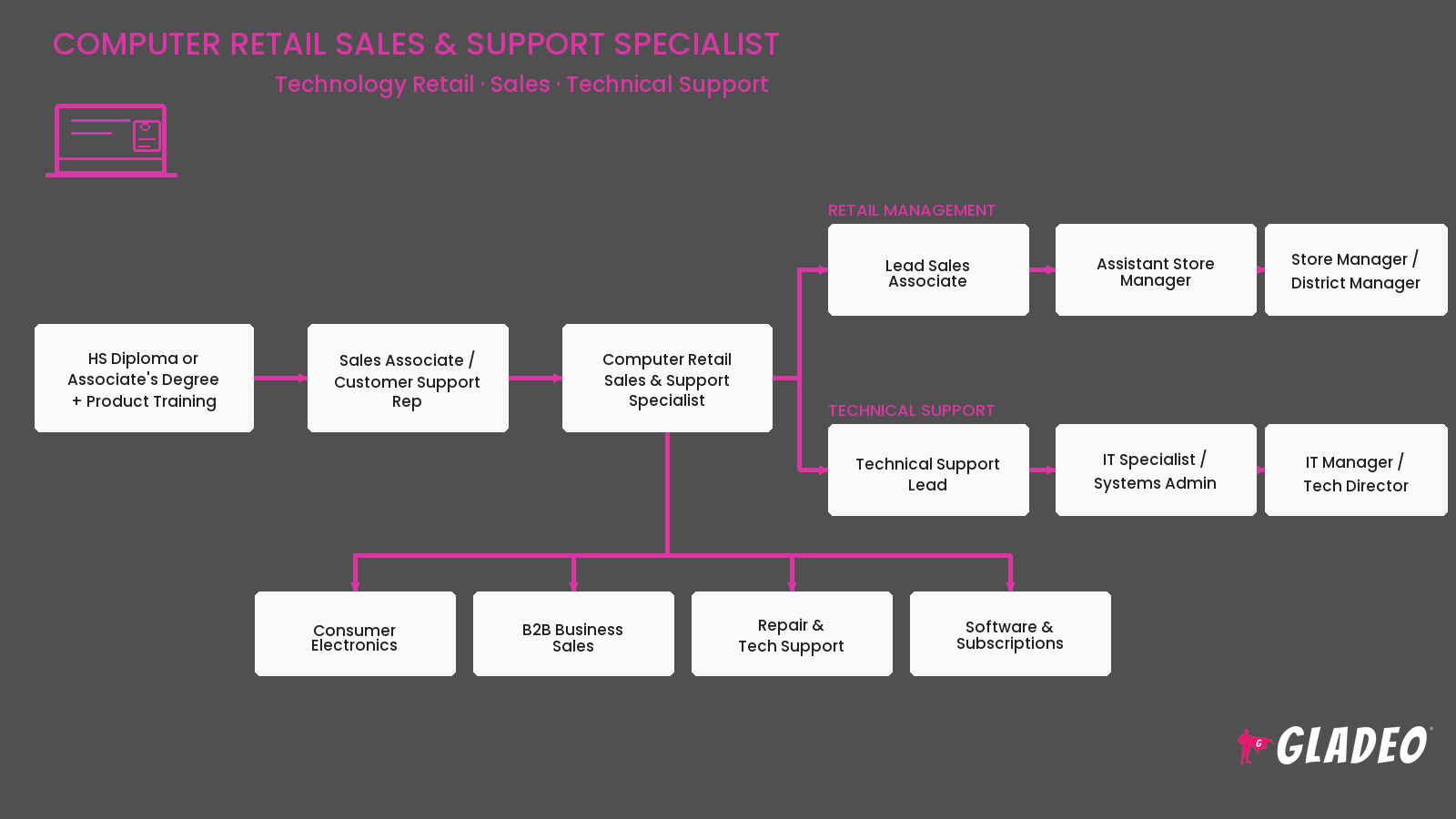
- Retail Floor Specialist: Focus on customer interaction, product demos, and sales.
- Tech Support Specialist: Provide troubleshooting, installation, and basic repairs.
- B2B Sales Specialist: Work with small businesses to provide computer solutions.
- Store Trainer/Lead: Mentor new employees and lead product knowledge sessions.
- Electronics retail stores (national chains and local shops)
- Online retailers with in-store pickup or service centers
- Computer manufacturers and brand showrooms
- Office supply chains
- IT service providers or authorized service centers
Working in retail often means standing for long hours, handling high customer volume during busy seasons, and staying patient under pressure. Sales targets and technical problem-solving can make some days hectic.
However, you’ll develop valuable communication, sales, and tech support skills that can lead to career growth in IT, business, or technical services.
- Evolving Product Lines: Faster processors, AI-enhanced devices, and smart accessories mean specialists must constantly learn.
- Omnichannel Retail: Customers shop both online and in-store, so specialists often support both.
- Upskilling in Cybersecurity: With more devices connected to networks, basic security knowledge is becoming essential.
- Certifications: Employers value staff with IT support certifications.
- Customer Experience Focus: Great service often matters more than product specs.
When they were younger, Computer Retail Sales & Support Specialists often loved exploring gadgets, tinkering with electronics, and figuring out how things worked. They might have been the one in the family who set up the Wi-Fi, installed new software, or fixed a frozen computer. Many enjoyed spending time in computer labs, playing or building games, and trying out new apps or programs before anyone else. Their natural curiosity about technology made learning these skills feel more like fun than work.
They also tended to enjoy activities that involved problem-solving and helping others. Some ran small tech-related fundraisers, joined computer clubs, or volunteered to help teachers with classroom equipment. Others simply liked explaining how to use a new device to family and friends. This early mix of technical interest and people skills often grows into a strong foundation for a career in computer retail and support.
Most Computer Retail Sales & Support Specialists start with a high school diploma and build their expertise through specialized training, certifications, or associate degrees related to technology and sales. Hands-on experience with computers and customer service is crucial for success.
Students can take courses in relevant subjects such as:
- Introduction to Computer Science
- Basic Electronics
- Business Communication
- Marketing Principles
- Customer Service Skills
- Information Technology Fundamentals
- Sales Techniques
- Computer Hardware and Software
- Networking Basics
- Entrepreneurship
Beyond formal education, gaining experience through internships, retail jobs, or tech support roles helps build the practical skills needed. Creating a portfolio of customer interactions or sales successes can also impress future employers.
- Volunteer or work part-time at a computer or electronics store, school tech lab, or community center to gain hands-on experience with devices and customer service.
- Take courses in computer science, information technology, business, communication, and math to build both technical and sales skills.
- Participate in activities that help develop teamwork, problem-solving, and leadership skills—such as computer clubs, robotics teams, or student organizations.
- Watch YouTube tutorials on computer troubleshooting, tech trends, and product reviews. Read technology magazines or online sources to stay updated.
- Explore different types of tech environments—like retail stores, repair shops, or IT support centers—to figure out where you might want to work.
- Look for scholarships or short-term tech training programs that can help you earn certifications while in school.
- Apply for internships or summer jobs in retail or tech support roles to gain practical, real-world experience.
- Build a professional network early by connecting with mentors, teachers, and supervisors who can serve as future references.
- Look for programs offering a mix of technology and sales training.
- Choose schools with strong internship or co-op opportunities.
- Verify the curriculum includes hands-on experience with current hardware and software.
- Seek programs with connections to local tech companies or retailers.
- Consider certifications in technology (e.g., CompTIA) and sales (e.g., Certified Sales Professional).
- Evaluate the quality of instructors and their industry experience.
- Check for career services that support resume building and job placement.
- Ensure the program teaches CRM and sales software tools.
- Look for courses covering customer psychology and buyer behavior.
- Select programs that encourage teamwork and communication skills development.
- Confirm access to up-to-date technology labs and resources.
- Find programs that offer workshops on emerging tech trends.
- Search for openings on job boards like Indeed, Glassdoor, and LinkedIn.
- Use keywords like “Computer Sales Associate,” “Retail Technology Specialist,” “IT Support Assistant,” or “Customer Service Tech.”
- Highlight your tech knowledge, communication skills, and any certifications (such as CompTIA or basic IT training) on your resume.
- Gain experience through internships, part-time jobs, volunteer tech support, or helping at school IT offices.
- Be ready to demonstrate your knowledge in interviews—many employers will ask practical tech or troubleshooting questions.
- Practice answering common customer service questions to show you can communicate clearly with non-technical customers.
- Visit local electronics or computer stores to learn how they operate and observe how employees interact with customers.
- Ask teachers, mentors, or career counselors for references or recommendation letters to strengthen your application.
- Build a simple portfolio or list of skills (e.g., software installation, basic troubleshooting, or setting up devices) to showcase your abilities.
- Dress professionally and bring a positive attitude to interviews—enthusiasm and reliability often matter as much as technical skill.
- Gain certifications in sales and technology to advance expertise.
- Build relationships with manufacturers and vendors for better product knowledge.
- Master advanced sales techniques and negotiation skills.
- Take on leadership roles such as team lead or trainer.
- Expand into specialized sales like enterprise solutions or software licensing.
- Develop skills in data analytics to optimize sales strategies.
- Pursue further education like a bachelor’s degree in business or IT.
- Transition into management roles overseeing sales teams or operations.
Websites
- CompTIA – for IT certifications, training, and career resources.
- LinkedIn Learning – for online courses on tech, sales, and customer service skills.
- Indeed – to search for entry-level retail and tech support jobs.
- Best Buy Careers – to find openings at one of the largest electronics retailers.
- Apple Jobs – for retail and technical support roles.
- Microsoft Learn – for free IT training and skill-building resources.
- Glassdoor – to browse jobs and read company reviews.
- ZipRecruiter – to find tech support and retail positions nationwide.
- Dice – for technology-focused job postings.
- CareerBuilder – for job listings and resume-building tools.
- Monster – for retail and IT job searches.
- Dell Careers – to explore sales and support jobs with a major computer brand.
- HP Careers – for opportunities with a leading tech company.
- Google Careers – for customer support, retail, and product training roles.
- CompTIA Career Center – for IT job boards and certification pathways.
Books
- PCs for Dummies by Dan Gookin
- CompTIA A+ Certification All-in-One Exam Guide by Mike Meyers
- How to Win Friends and Influence People by Dale Carnegie (for sales & communication skills)
The career outlook for Computer Retail Sales & Support Specialists is steady but may grow more slowly as online shopping and automated support increase. There will still be demand for people who can explain and troubleshoot tech for customers.
If you’re exploring related careers, consider:
- Technical Support Specialist
- IT Help Desk Technician
- Marketing Coordinator
- Customer Service Representative
- Retail Store Manager
- Software Sales Representative
- Digital Marketing Specialist
- Product Specialist
- Business Development Representative
- Technology Trainer
Newsfeed

Featured Jobs
Online Courses and Tools